The Quiet Burnout Behind Modern Downtime
Unmanaged stress rarely announces itself with a single dramatic moment. It builds through small, unresolved tensions that accumulate across a week until sleep suffers, patience thins, and the hours meant for rest start feeling just as draining as the hours spent working. Left unaddressed, this slow accumulation shapes how people show up for their families, their jobs, and themselves. The cost isn’t always visible right away, but it compounds.
Part of the issue is that many popular relaxation habits require more effort than they appear to. Meditation apps demand a quiet mind that stressed people often don’t have. Exercise helps, but it asks for energy that’s already depleted by the end of a long day. Even reading can feel like another task competing for focus when attention is already stretched thin. People end up abandoning these habits not because they don’t work, but because they ask too much at the exact moment someone has the least to give.
Why Repetitive, Low-Stakes Creativity Works Differently
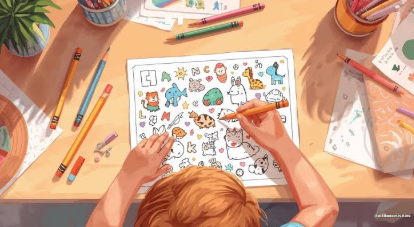
Simple, structured creative activity sidesteps the problem of needing willpower to begin. There’s no blank page to stare at, no decision fatigue about what to create, and no risk of doing it wrong. This is part of why coloring pages for adults have found a steady audience among people who never considered themselves artistic but still wanted something to occupy their hands and quiet their thoughts after a demanding day.
The appeal isn’t just anecdotal. Attention tends to narrow pleasantly when a task has clear boundaries and a predictable, low-pressure outcome, which is exactly what a printed pattern or illustrated page offers. Choosing colors, staying inside lines, and watching an image slowly resolve gives the mind something concrete to track, which crowds out rumination without demanding the kind of sustained focus that feels impossible on a hard day. It’s a small, repeatable ritual rather than a project with stakes attached.
Research backing this pattern isn’t limited to personal testimony. Studies referenced in National Endowment for the Arts research have examined how engagement with the arts correlates with reduced stress markers and improved emotional regulation across a range of age groups, lending some institutional weight to what many people already sense anecdotally. That kind of engagement doesn’t need to be ambitious or skillfully executed to produce a calming effect; it simply needs to be sustained long enough to interrupt the usual cycle of rumination.
Choosing a Practice That Actually Sticks Around
Not every relaxation habit deserves the same amount of trust, and it helps to be honest about what tends to get abandoned within a week. A good test is whether the activity can be picked up in under a minute, without setup, planning, or any sense of obligation attached to doing it correctly. If a habit requires scheduling, special equipment, or a mental pep talk to start, it’s competing against the very fatigue it’s supposed to relieve.
Variety also matters more than people expect. Designs that shift in complexity and subject matter prevent the activity from becoming another flat routine, which is often what causes people to quietly drop a habit after the novelty fades. Pages with intricate botanical patterns suit a slower, more meditative evening, while simpler geometric designs work better for short breaks during a hectic afternoon.
Cost and accessibility shouldn’t be overlooked either. A practice that depends on expensive supplies or a subscription someone eventually forgets to cancel is less likely to survive long-term than something inexpensive and easy to pick back up after a lapse. The goal isn’t perfection or consistency for its own sake, but having something reliable enough to return to when stress builds and motivation for more demanding routines simply isn’t there.